MLOps platform · Medical AI training · 2025 – 2026
An HPC platform researchers actually use
My first GPU platform, on Kubeflow, was barely used. I asked researchers why, moved to Slurm, and built a cluster that puts every GPU to work.
- Role
- MLOps platform architect
- Built for
- The research teams
- Duration
- 2025 – 2026
- Stack
- Slurm · NVIDIA Container Toolkit · Ansible
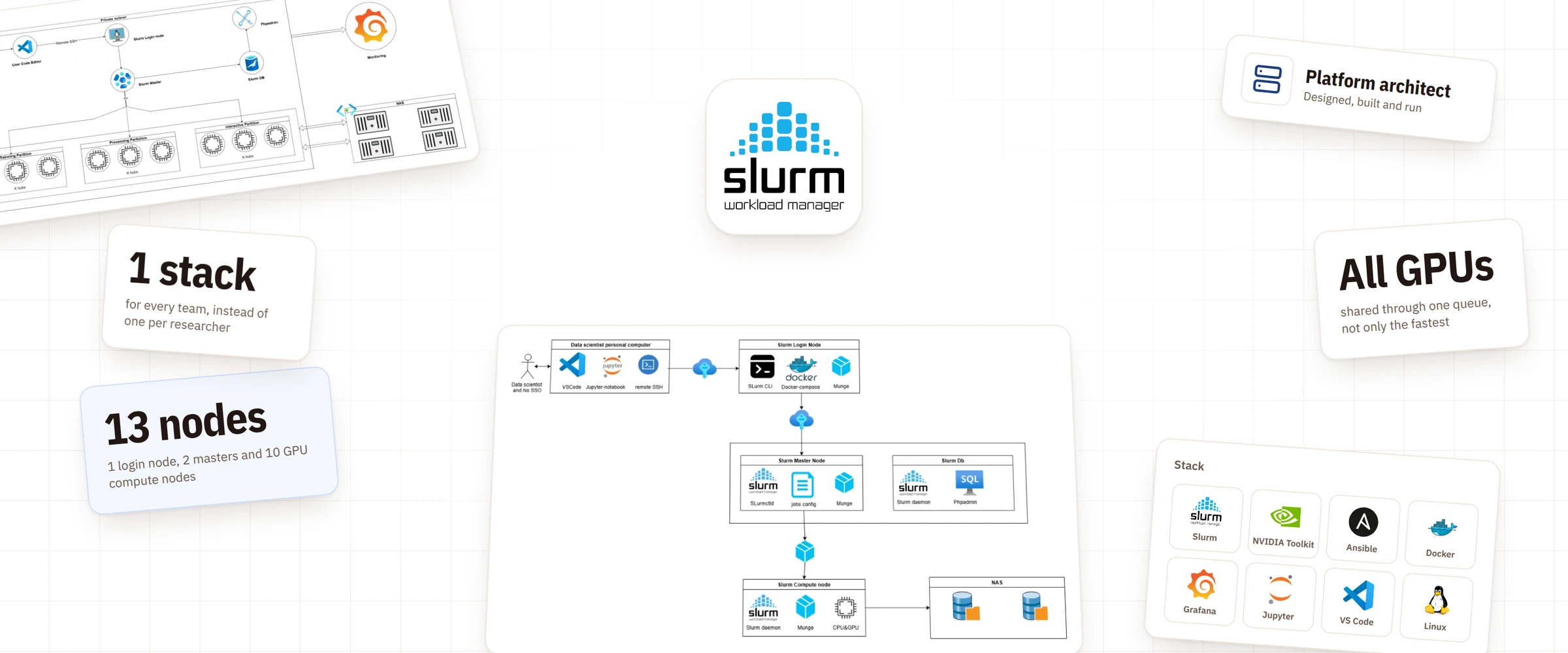
13 nodes
1 login node, 2 masters and 10 GPU compute nodes
All GPUs
shared through one queue, not only the fastest
1 stack
for every team, instead of one per researcher
01 · The need
The GPUs were there, but used badly. Researchers queued up for the most powerful ones and left the others idle. They logged into the machines directly over SSH and each installed their own package versions, so we had no control over the environment and bugs came back all the time. There was no real automated MLOps pipeline. My first answer was a platform on Kubeflow: it went live, but adoption stayed far below the target. I interviewed the researchers, and the answer was clear: Kubeflow was too complex for their daily work.
02 · Constraints and decision
- Constraints
- Users · researchers, not platform engineers; the workflow had to stay familiar.
- Hardware · the GPU nodes already in place.
- Environment · one controlled software stack, no more installs by hand on the nodes.
- Options
- Keep Kubeflow · train every team on a powerful platform, but it asked researchers to change how they work.
- Back to direct SSH · add rules, so nothing changes for users, and nothing is under control either.
- Move to Slurm · a simpler scheduler that researchers already knew from research computing, and that hands out every GPU through a queue.
- Decision
- Delivery · a POC, then an MVP, then production, with the researchers testing each step.
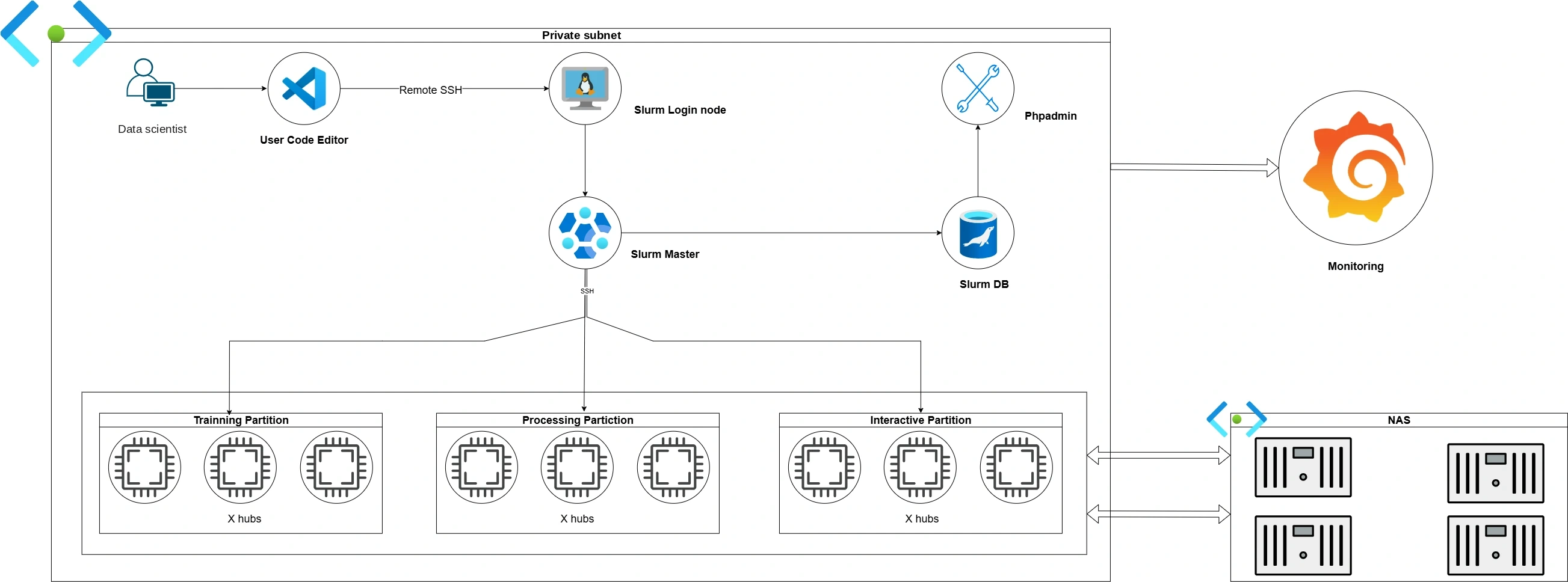
- Scheduling · Slurm with 2 masters, 1 login node and 10 GPU compute nodes, split into training, processing and interactive partitions.
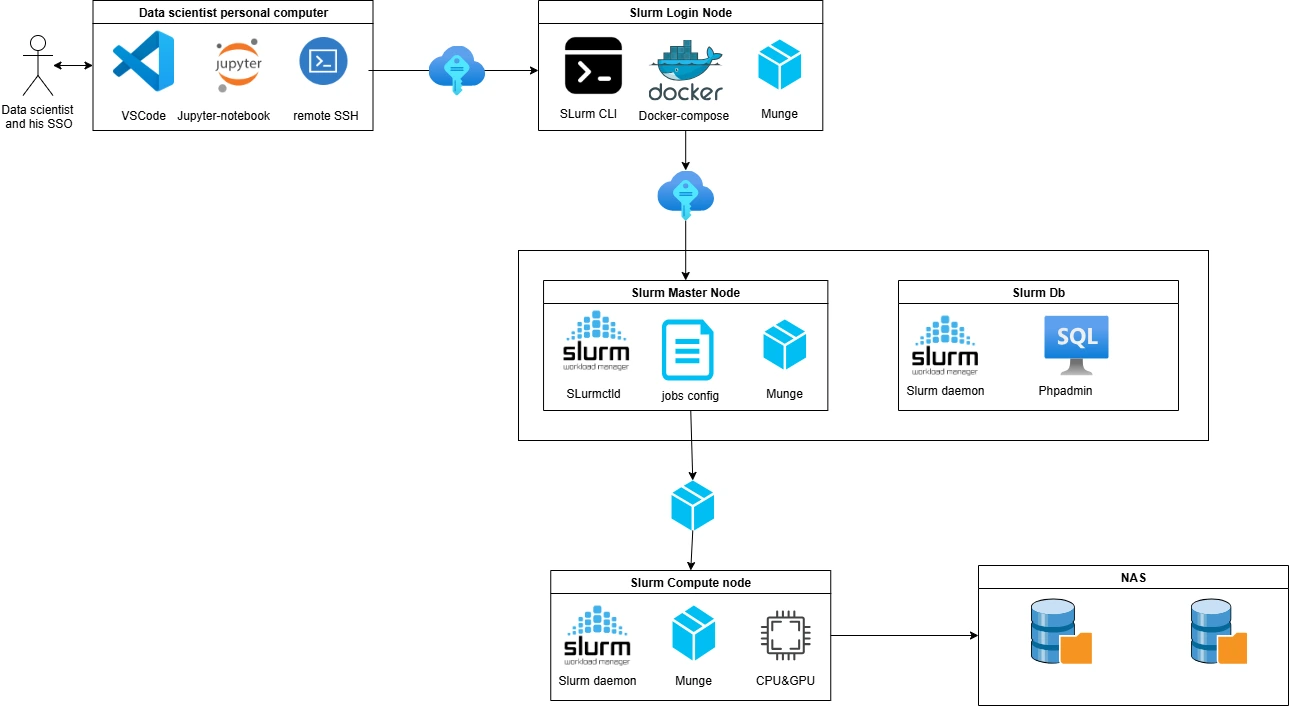
- Environment · jobs run in containers with the NVIDIA Container Toolkit, so every team gets the same stack and versions.
- Access · researchers keep VS Code, Jupyter and SSH with single sign-on, and submit from the login node instead of logging into the GPUs.
- Operations · nodes deployed with Ansible, authenticated with Munge, a shared NAS for data, and Grafana to monitor the cluster.
03 · Architecture
The cluster
What runs where
 Slurm
 NVIDIA Container Toolkit
 Ansible
 Docker
 Grafana
04 · Result
- Adoption · from a platform barely used to one several research teams use every day, with most training jobs running on it.
- Every GPU is in use · jobs go to the queue, not to the fastest machine.
- One controlled environment · no more package versions installed by hand on the nodes.
- No new habits to learn · researchers kept the tools they already used.
05 · What I learned
- Adoption over launch dates · the first version was live, and still a failure until I asked users why.
- Adoption comes from habits · researchers use a platform that fits their tools, not one that asks them to change.
- Environment first · most of the bugs came from the setup, not from the code.
Next case study
Engineering teams · 2026Agentic AI that engineers trust